November 13, 2026
Commercial automatic doors serve as the vital gateway to modern businesses, welcoming customers, employees, and deliveries every single day. When these entrances operate smoothly, they enhance accessibility, improve indoor climate control, and create a welcoming environment for everyone entering the building. However, because these door systems rely on complex mechanical parts, sensitive sensors, and continuous electrical power, they require consistent attention to keep running at their best performance level. Routine professional inspection prevents minor component wear from turning into major operational disruptions that cost time and revenue. Implementing a proactive maintenance strategy ensures that your entryways stay safe, reliable, and compliant with safety codes year-round. Partnering with professional technicians for automatic door repairs keeps high-traffic entryways operating safely and efficiently. By committing to structured care, business owners can protect their physical investment while maintaining an uninterrupted flow of daily traffic.
Understanding Key Components of Automatic Entrance Systems
An automatic door is far more than a simple moving panel; it is an intricate assembly of mechanical, electrical, and electronic parts working in tandem. The primary elements include activation sensors, safety sensors, drive motors, control boards, rollers, and heavy-duty tracks. Sensors detect approaching foot traffic and signal the control system to open the panel, while safety sensors monitor the doorway area to keep the door from closing on individuals or objects. Over time, friction, dust accumulation, and heavy daily use cause wear across all these moving elements. When one part experiences mechanical strain, it puts additional pressure on the surrounding hardware, often leading to unexpected performance issues. Addressing minor component wear through timely automatic door repairs prevents cascading mechanical failures that could compromise your entire entryway.
Establishing a Routine Daily and Weekly Visual Inspection Plan
Facility managers can maintain operational oversight by establishing simple daily and weekly visual inspection habits for staff. These quick checks should focus on noticing visible signs of wear, such as cracked glass panels, frayed cables, loose housing panels, or debris settling in the floor tracks. Staff members should observe whether the door opens smoothly or displays unusual stuttering movements during its travel path. Hearing strange grinding noises or squeaks during operation often serves as an early indicator that moving components require professional lubrication or alignment. Identifying these subtle warnings early allows facility leaders to schedule targeted automatic door repairs before a complete system failure stops entryway traffic entirely.
Evaluating Sensor Functionality and Safety Clearance Zones
Sensors act as the primary brain and safety shield for any automated entry system, making their accurate function essential for occupant safety. Over time, environmental dust, moisture, and temperature fluctuations can cloud sensor lenses or alter their sensitivity ranges. During routine professional checkups, technicians verify that activation sensors detect approaching traffic at appropriate distances without excessive delay. Safety zones must also be thoroughly evaluated so that presence sensors hold the doors open whenever a person stands directly in the threshold path. If a sensor becomes unresponsive or triggers erratic opening cycles, contacting qualified professionals for automatic door repairs ensures the electronic detection fields are calibrated correctly to meet safety requirements.
Checking Door Track Cleanliness and Roller Alignment
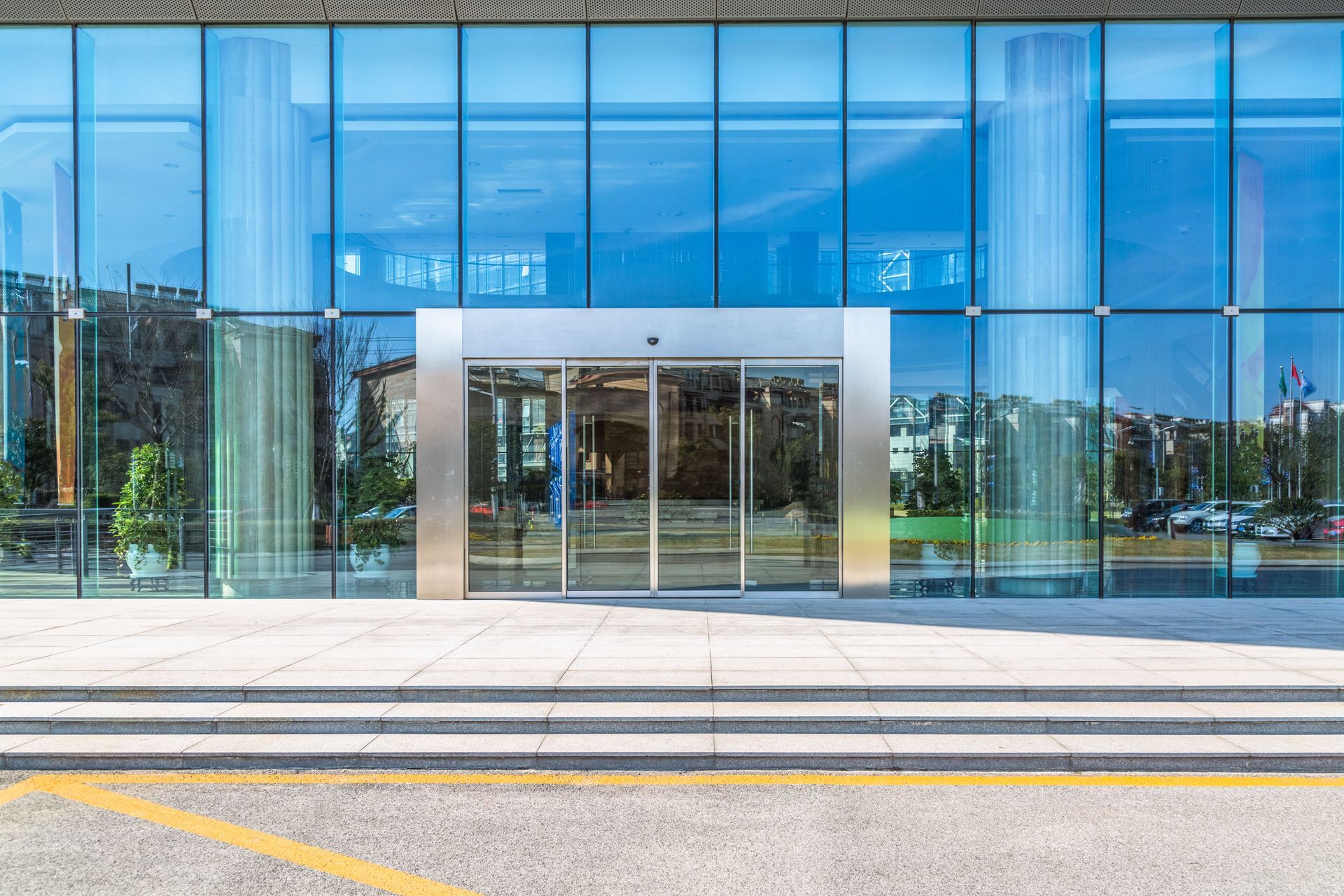
Tracks and rollers carry the physical weight of sliding panels and guide their linear movement throughout every opening cycle. Outdoor dirt, pebbles, road salt, and indoor debris frequently collect inside lower door tracks, creating friction and causing rough operation. According to Market.us, sliding doors dominated the automatic door market by type segment with 45.5%, driven by their widespread use in commercial and residential buildings. Because these sliding designs are so prevalent across commercial facilities, keeping track channels clean and free of physical obstructions is vital for preventing roller derailment. When tracks become bent, or rollers show signs of flat spots, scheduling automatic door repairs restores fluid mechanical travel and reduces strain on the drive motor.
Inspecting Drive Belts, Chains, and Mechanical Hardware
The mechanical drive system transfers power from the electric motor directly to the door panels, moving heavy frame assemblies effortlessly. Drive belts and chains sustain continuous tension during operation, which can gradually lead to stretching, cracking, or slackness after thousands of cycles. Loose drive belts cause slipping motions, jerky door movement, or delayed opening times that irritate visitors and slow down traffic flow. In addition, internal mechanical fasteners can vibrate loose during standard daily operations. Professional technicians check these internal assemblies during regular service visits, making necessary tension adjustments or performing automatic door repairs to replace worn drive components before they snap.
Verifying Electrical Connections and Control Board Reliability
Behind the sleek exterior of an automated door lies a complex system of low-voltage wiring, transformers, and computerized control boards. Electrical surges, power outages, and simple aging can lead to loose terminal connections or degraded circuit components over time. Faulty electrical pathways might manifest as intermittent door operation, sudden power loss, or failure to respond to sensor signals altogether. Inspecting control boards requires precise diagnostic tools to evaluate voltage levels and signal continuity safely. When electrical anomalies occur within the system, prompt automatic door repairs ensure stable power delivery and preserve the delicate balance of electronic door control systems.
Reviewing Weather Stripping, Seals, and Energy Efficiency
Commercial entrances play a significant role in maintaining the interior temperature of a building, helping control heating and cooling costs. Flexible weather seals line the edges of automatic door panels to block wind, rain, dust, and outdoor temperatures from entering the facility. With constant exposure to changing weather conditions and friction from regular panel movement, rubber and brush seals eventually dry out, crack, or flatten. Damaged seals permit air leaks, forcing HVAC systems to work harder while allowing dirt into internal track systems. Replacing worn seals during scheduled maintenance or alongside other automatic door repairs preserves building energy efficiency and keeps interior spaces comfortable.
Adhering to National Safety Standards and Accessibility Regulations
Commercial entryways must comply with strict accessibility guidelines and industry safety codes to safeguard every person who enters the facility. Regulations govern parameters like door opening speeds, closing force limits, delay times, and manual emergency opening forces. If a door closes too fast or with excessive force, it presents a hazard to visitors, particularly elderly individuals or those using mobility aids. Certified door technicians perform precise force tests and speed calibrations during routine service inspections to ensure full compliance with current standards. If tests reveal non-compliant operational parameters, expert technicians execute precise automatic door repairs to adjust mechanical timers and safety force limits.
Implementing Emergency Release Systems and Backup Power Checks
In the event of a power outage, building fire, or emergency evacuation, automatic doors must allow occupants to exit the building quickly and safely. Modern commercial systems incorporate mechanical breakout functions or battery backup units that push doors open or allow them to be manually swung open under pressure. These emergency mechanisms must be routinely tested to confirm that they release smoothly without jamming or excessive resistance. Battery systems also require periodic testing to ensure they hold sufficient charge during facility power loss. Scheduling automatic door repairs whenever emergency backup systems show signs of failure maintains vital safety pathways during critical situations.
Understanding the Importance of Professional Service and Documentation
Maintaining a thorough service log detailing every inspection, adjustment, and component replacement is a smart business practice for facility managers. Keeping complete records helps identify operational trends, track hardware lifespans, and demonstrate compliance during safety audits or insurance reviews. Because automatic door systems rely on sophisticated electronics and heavy structural parts, attempting maintenance without formal training can cause severe mechanical damage or compromise user safety. Relying on certified service professionals for all automatic door repairs guarantees that work is completed according to manufacturer specifications and safety guidelines, protecting your entrance investment for the long haul.
A comprehensive maintenance plan is essential for keeping commercial automatic doors functioning smoothly, safely, and efficiently throughout the year. By paying close attention to track cleanliness, sensor accuracy, drive mechanisms, and emergency systems, facility leaders can avoid unexpected entryway disruptions and prolong the lifespan of their equipment. Partnering with qualified professionals for routine inspections and timely automatic door repairs ensures your business remains fully accessible and compliant with all industry standards. To keep your commercial entryways operating reliably and safely every day, reach out to the experienced team at Pad Door Systems, Inc. to schedule your comprehensive service visit.